
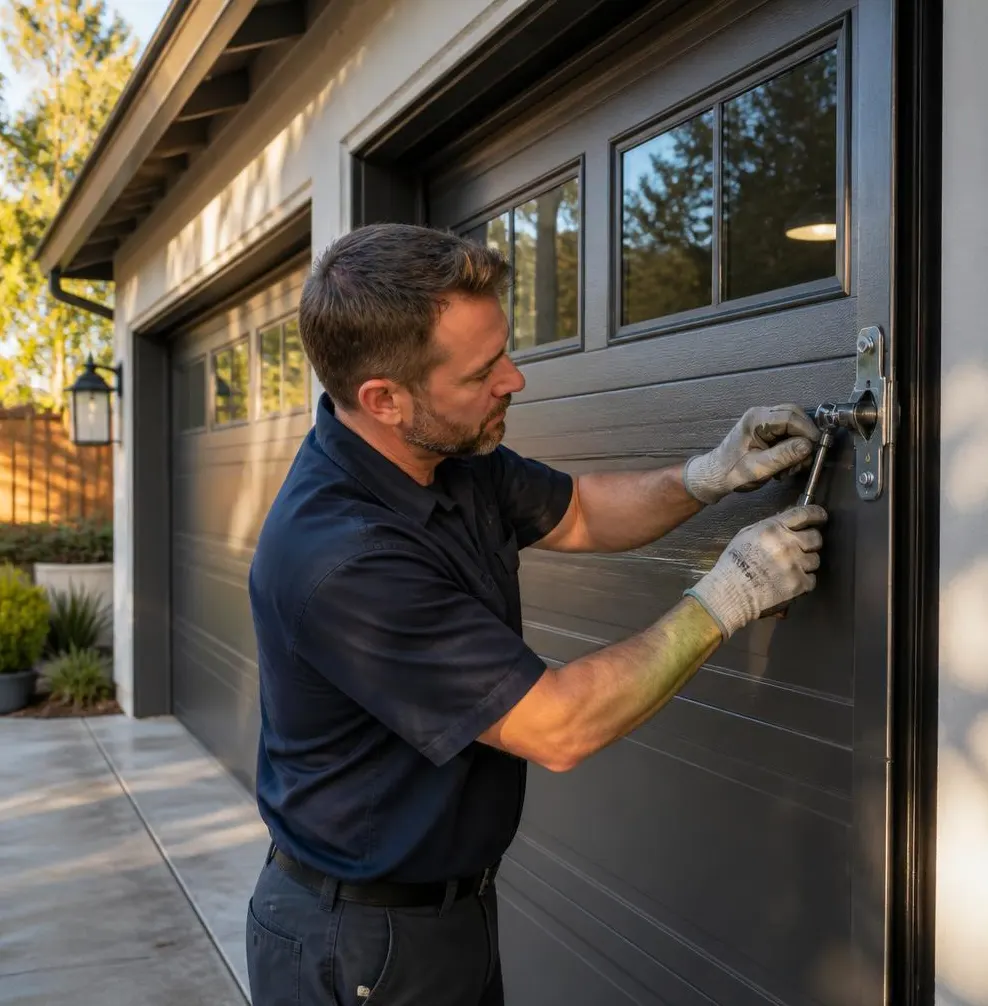
What a Technician Sees on This Call
This is one of the most common service calls we get around Citrus Heights, especially as we move out of the dry, dusty fall months and into the first rains of the season. A homeowner presses the remote, nothing happens. They walk over and hit the wall button — still nothing. Sometimes the opener light blinks a few times and goes quiet. Sometimes there's no response at all, not even a hum from the motor. Before touching anything, a technician wants to know: does the opener react to either control, does the light blink in a pattern, and did this start suddenly or get worse over a few weeks? Those details point straight to the cause.
Symptoms Worth Noting Before the Call
- Remote works from very close range but not from the driveway or car
- Wall button works but the remote doesn't, or vice versa
- Opener light blinks several times when you press the button, then stops
- Door opens but won't close, or closes partway and reverses
- Complete silence — no motor sound, no light, nothing
Each of these narrows down where the problem actually lives.
Causes, in the Order a Technician Checks Them
1. Dead or Weak Remote Battery
It sounds basic, but it's the first thing to rule out because it's the fastest fix. A weak battery often causes intermittent response — works sometimes, especially up close, fails other times. Swap the battery and test from the usual distance before moving on.
2. Dust or Corrosion on the Antenna
The opener's antenna hangs from the motor unit and should point straight down. After a long dry season with dust, pollen, and occasional wildfire smoke settling on garage equipment, that antenna can get coated or knocked out of position, weakening the signal. A quick wipe-down and repositioning solves more of these calls than people expect.
3. Lost Programming or Rolling Code Sync
Power outages, breaker trips, or a new garage door opener remote can throw off the rolling code sync between remote and receiver. The fix is reprogramming the remote following the manufacturer's reset sequence — usually a button combination on the motor unit itself.
4. Misaligned or Dirty Safety Sensors
If the opener light blinks a set number of times, the photo-eye sensors near the floor are the likely culprit. Dust buildup from a dry fall, a spiderweb across the sensor eye, or a sensor bumped out of alignment will make the opener ignore commands as a safety measure. A technician cleans the lenses and realigns them so both sensors show a steady light.
5. Damaged or Corroded Wall Button Wiring
The low-voltage wire running to the wall button is thin and easily pinched, stapled too tight, or chewed by rodents — not uncommon in garages around the Sacramento area. As winter rain moves in, moisture intrusion at a wire splice can also cause a short. This calls for tracing the wire and replacing damaged sections or the button itself.
6. Failing Logic Board
If batteries, antenna, sync, sensors, and wiring all check out, the circuit board inside the opener may be failing — often from age, a power surge, or heat exposure during a hot inland summer. Diagnosis involves testing voltage at the board; replacement usually means a new logic board or, if the unit is older, a full opener replacement makes more financial sense.
7. Worn Motor or Capacitor
Last on the list because it's least common with this specific symptom, but a dying motor or capacitor can prevent the opener from responding to any input. This is typically found on units ten or more years old and usually means it's time to talk replacement rather than repair.
When to Call Citrus Heights Garage Door
If you've swapped batteries and wiped down the sensors with no luck, or if the opener light is blinking in a pattern you can't decode, it's time for a trained eye. Our Garage Door Opener Service covers everything from sensor alignment to logic board diagnostics, and if your system is aging out, we'll walk you through Garage Door Installation options that fit your home. Call Citrus Heights Garage Door today and get your opener responding the way it should, before the winter rains make troubleshooting harder.